10/2025 —
03/2026
datavis,
robotics
with
Charlotte
Preger
Opposites attract
graphics
all
data
process
infos

text
What happens to social interactions in times when individuals create their own perceptions of reality?
When digital technologies are embedded in the physical world? Where these phygital worlds are individual, visible to some and invisible to others?
This project constructs a world that vividly imagines a future in which immersive digital technologies shape everyday perception, in order to formulate rules and regulations for such technologies in relation to different places and their distinct connotations within urban space.
Through the research-process, core tensions mirroring three intertwined structures of conflict: person to person, person to reality, and person to space started crystallizing out. In the third, interestingly, the familiar relationship—where space is shaped by us and thus remains the object—begins to shift. Space, understood as a distributed canvas across different locations, starts to shape our content and experience in return, subtly repositioning itself as the subject. In this role, it shapes the object (the user) through its own form.
Thus, different locations have different impacts on perception.
A speculative video prototype tells the story of four individuals with different types and intensities of engagement with the technology. Moving away from binary storytelling, it presents multiple points of view that highlight relativity, exploring how conflicts emerge across different locations.
Potential regulatory implications, especially concerning personal freedoms:
Article 19
Everyone has the right to freedom of opinion and expression; this right includes freedom to hold opinions without interference and to seek, receive and impart information and ideas through any media and regardless of frontiers.
Article 19.1
Every individual has the inalienable right to be perceived in their natural state, free from external alterations or distortions imposed by sensory adaptation layers or similar technologies.
graphics
Exhibition on 29/04/2026 @City Lab Berlin
text
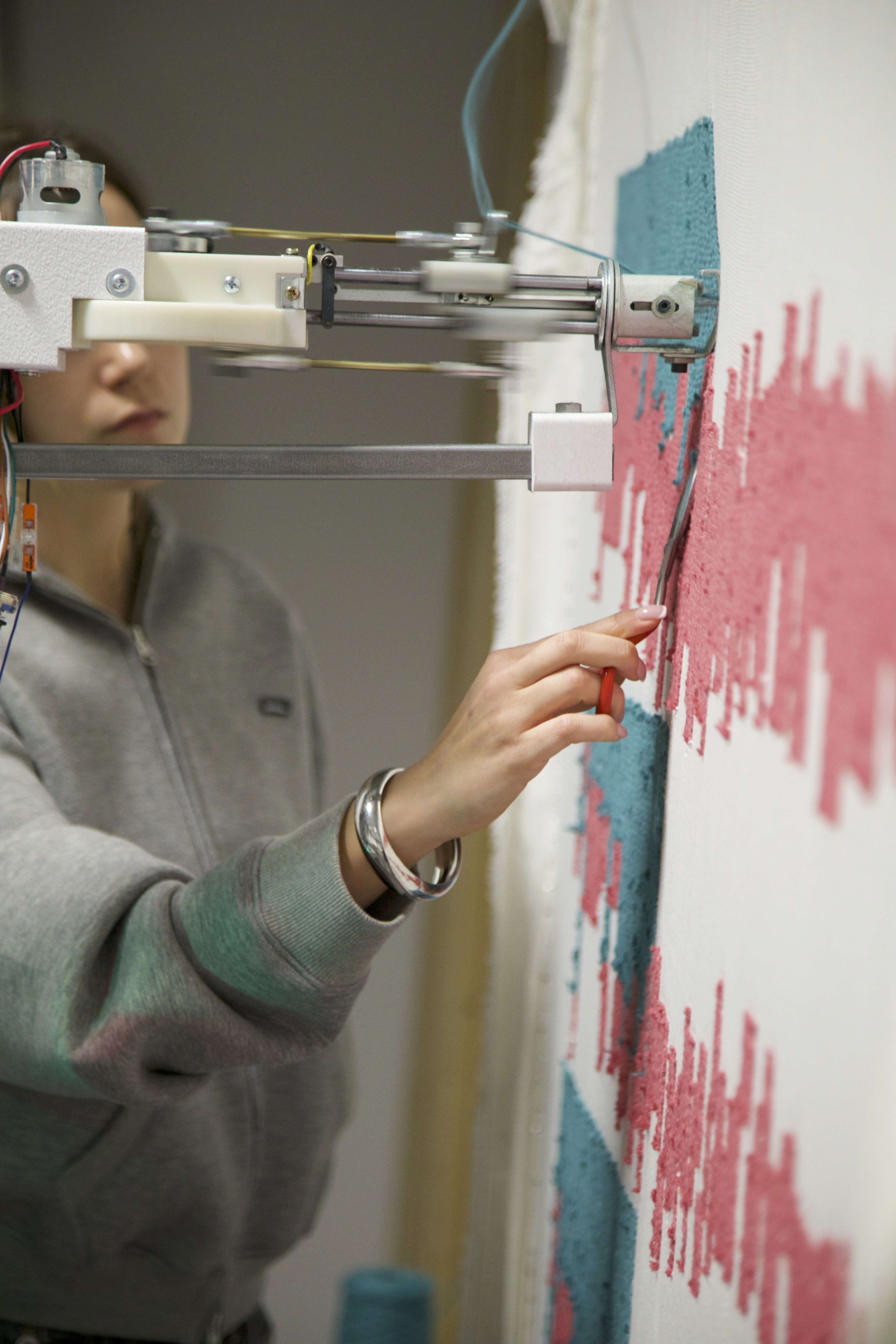
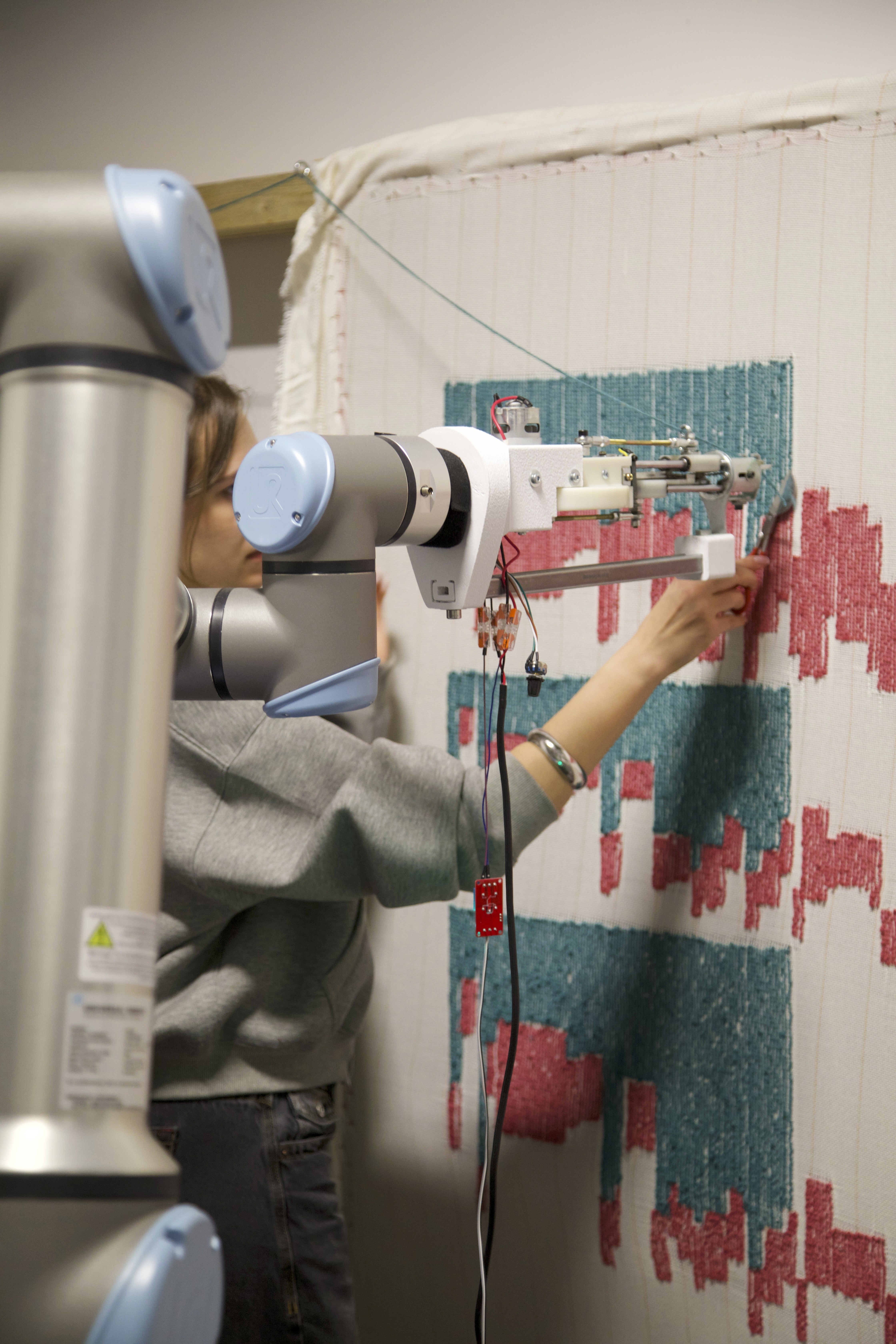
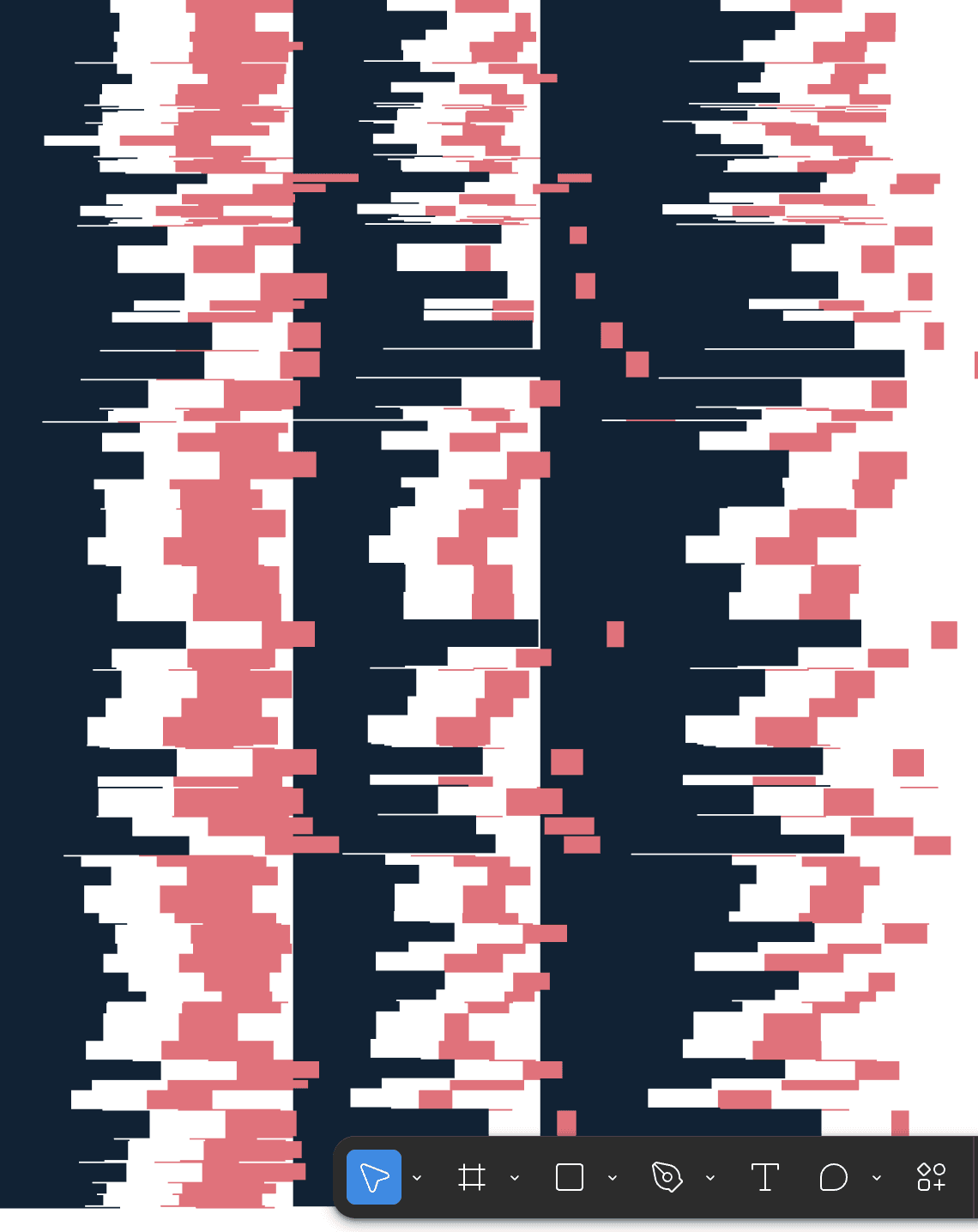
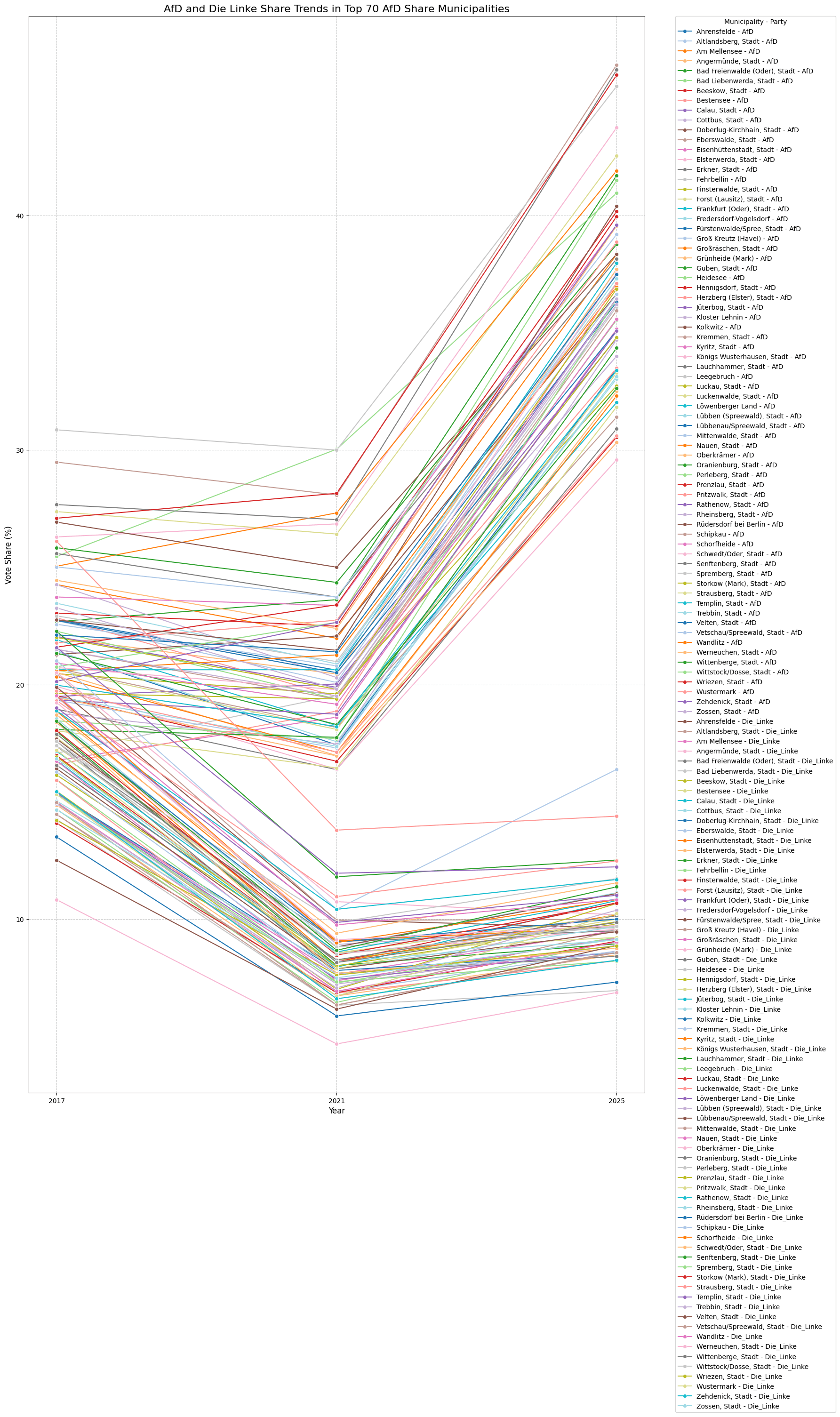
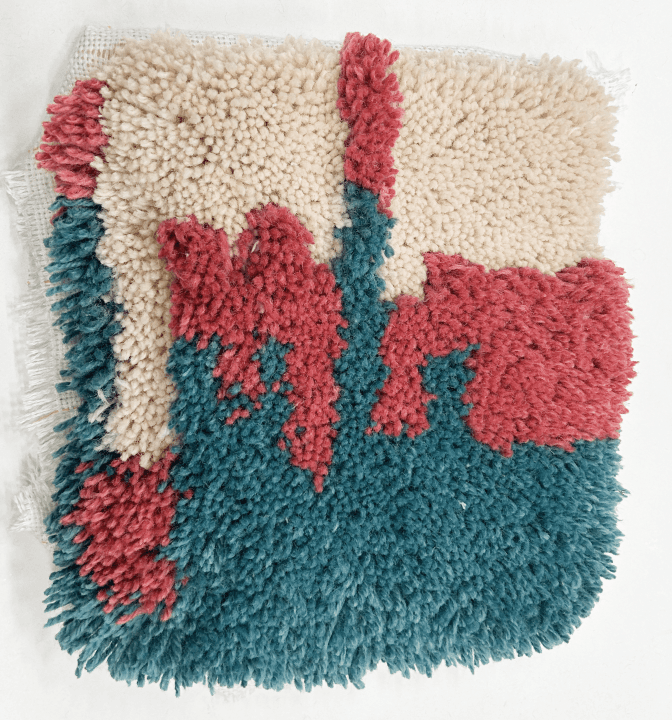
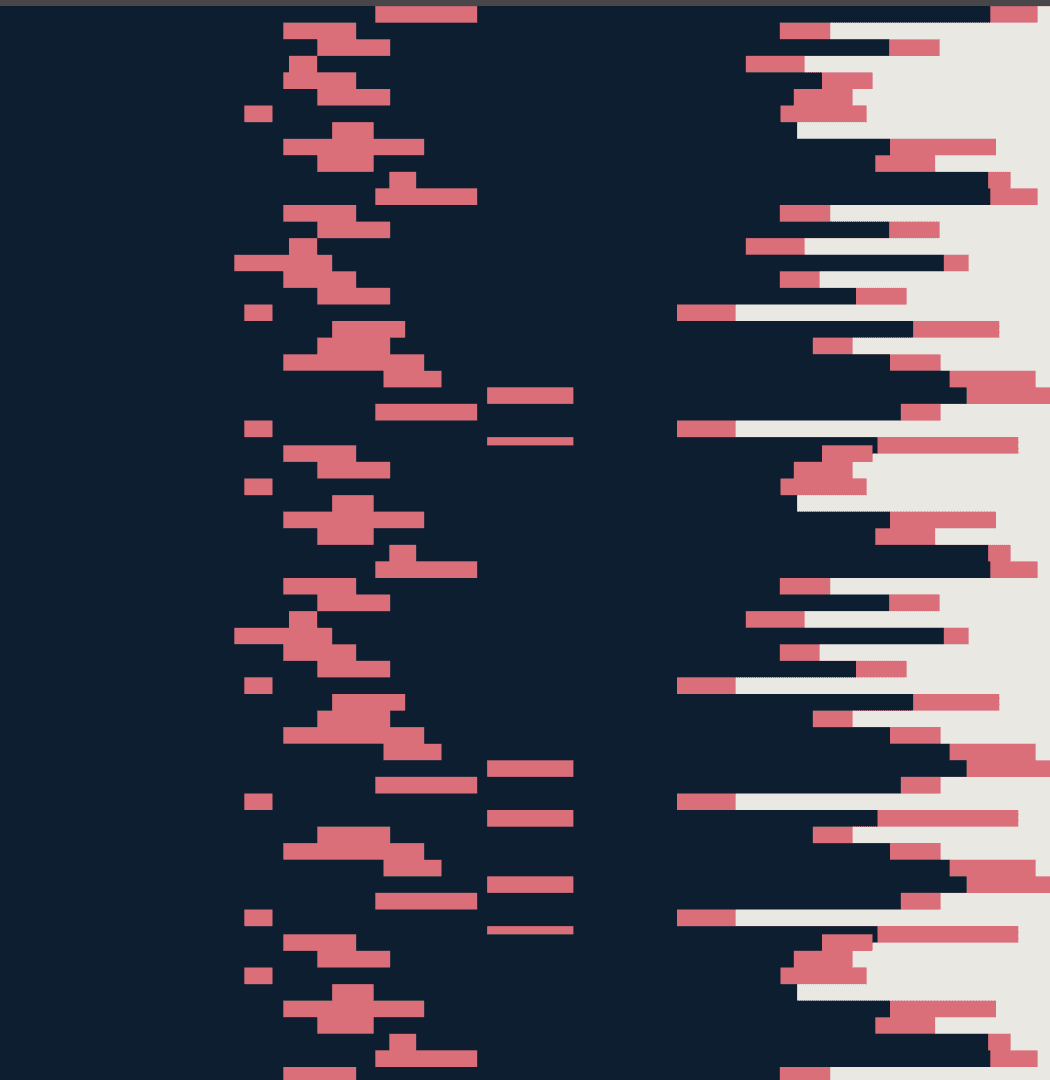
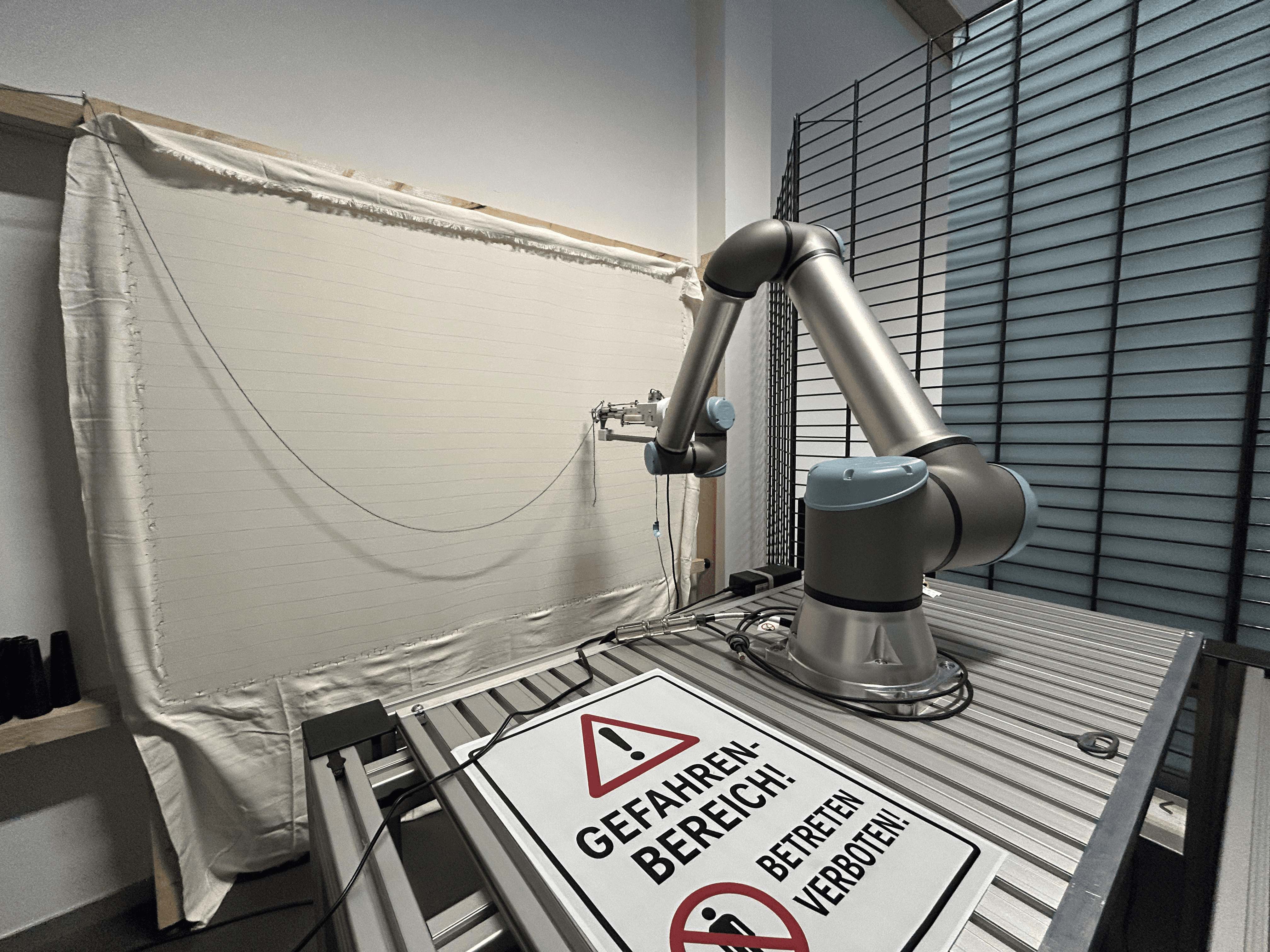
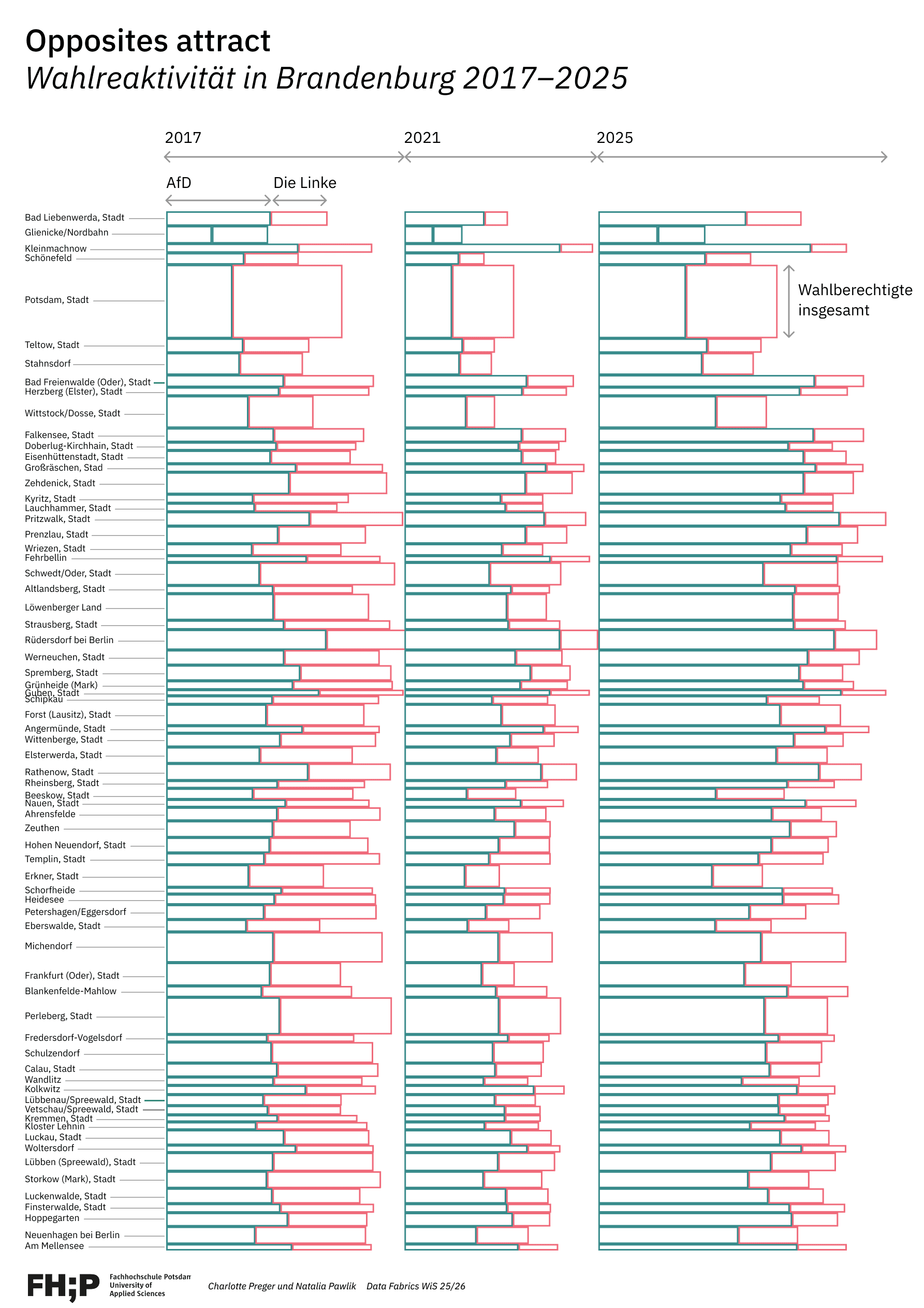
The graphic examines whether reactivity in voting behaviour between political extremes can be identified as a cross-aggregate phenomenon within Brandenburg. It is produced using a robot arm that tufts the data onto a large canvas, transforming the visualisation into a woven, rug-like surface.
The starting point is the overarching assumption of increasing polarisation throughout Germany. An analysis within Brandenburg gains its analytical significance against this backdrop: if cross-regional reactivity can be demonstrated within a single federal state, this supports the thesis that polarisation does not primarily result from the juxtaposition of different types of regions, but is also effective as a structural dynamic within territorial units.
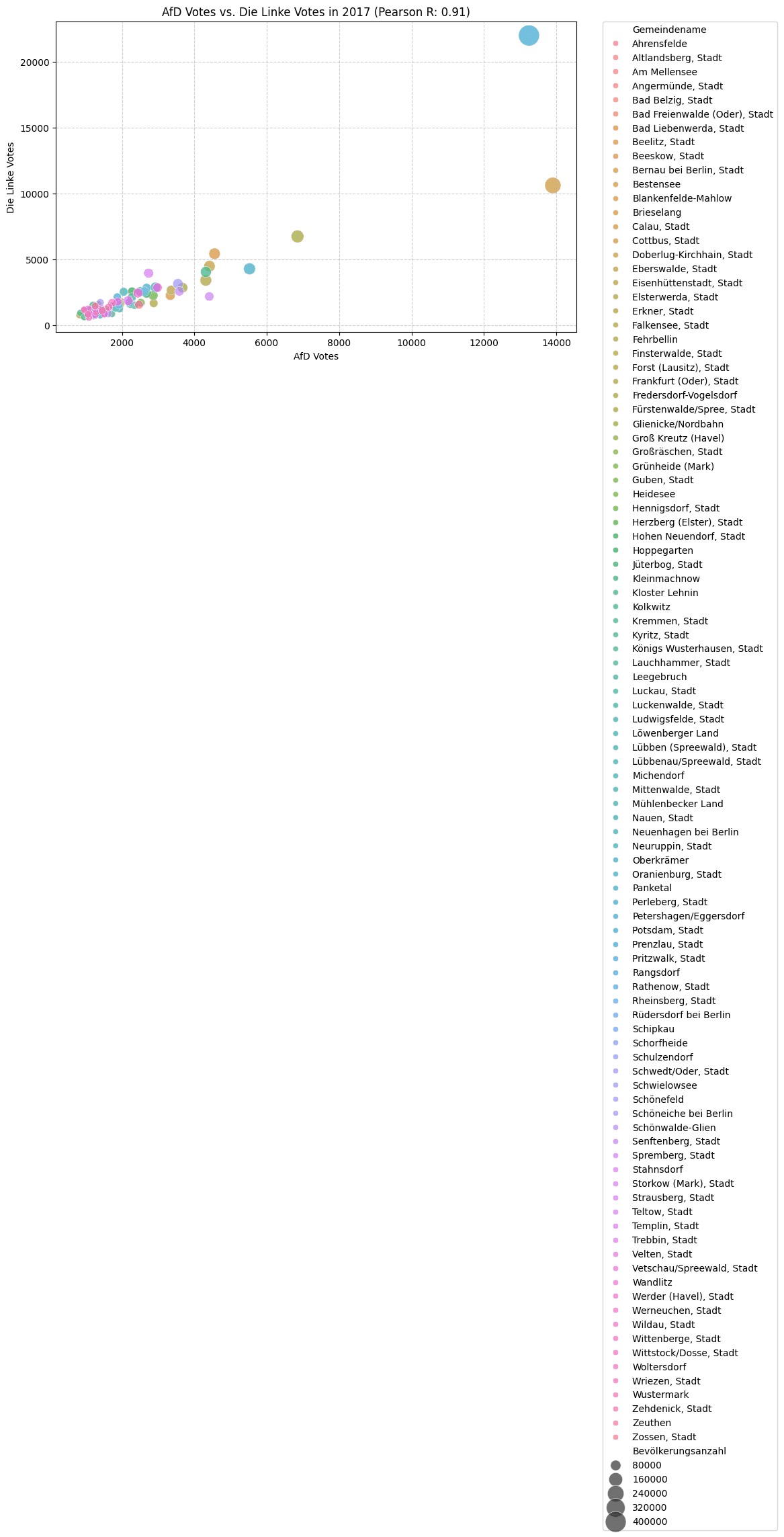
At the same time, the graph revisits the obvious urban-rural hypothesis by explicitly integrating the population size of the municipalities into the analysis. The height of the rows represents the respective population size and allows us to examine the extent to which reactivity is related to the demographic size of a municipality – and thus indirectly to urbanity. In this way, we examine whether the cross-aggregate polarisation dynamic is independent of classic urban-rural differences or whether it varies along this structure.
The graph shows the 100 municipalities with the highest share of votes for the AfD and is sorted according to the reactivity coefficient. Red represents the percentage of votes for Die Linke, blue for the AfD. The background is white because the focus is on the dynamics between the parties, not on the total number. Each line represents a municipality, and the height of the line represents the number of eligible voters.
10/2025 —
03/2026
datavis,
robotics
with
Charlotte
Preger